

Irreproachable means free from blame or criticism: faultless and not open to reproach. It describes conduct, character, or performance that is above suspicion and cannot reasonably be faulted. The word is formal and often used to praise behaviour or professional standards.
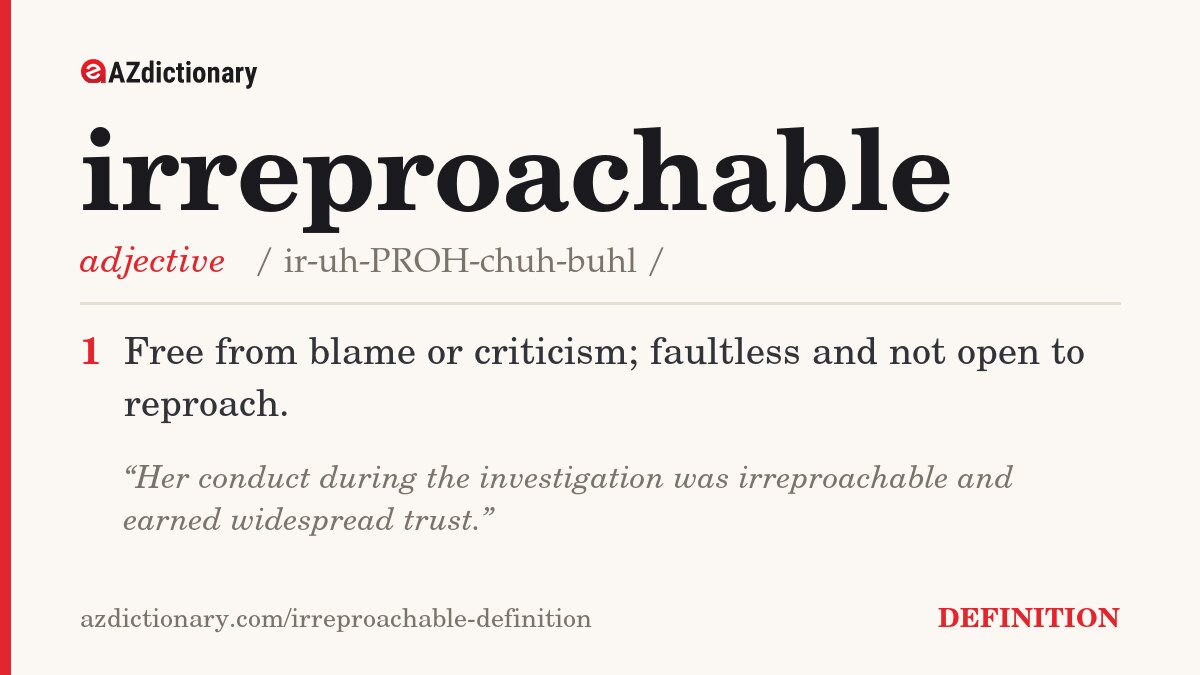
Part of speech: adjective
Pronunciation: ir-uh-PROH-chuh-buhl
Meanings
- Free from blame or criticism; blameless. Used when a person or action is morally or legally beyond reproach.
- Perfect or faultless in behaviour, manners, or professional conduct; not open to reasonable criticism.
Origin
The word comes from French irréprochable, built from the negative prefix in- plus reproachable. Historical dictionaries show the word in English from early modern use; modern dictionary entries record the same French origin. See the Cambridge Dictionary and the Oxford Learner’s Dictionary for full entries.
Examples in sentences
- Her conduct during the audit was irreproachable, which reassured the board.
- The charity prized an irreproachable reputation; every donation was carefully documented.
- He maintained an irreproachable record as a teacher for more than twenty years.
- They praised the project for its irreproachable methodology and clear evidence.
- Although sympathetic, the judge made clear that personal feelings would not affect his irreproachable duty.
Synonyms, antonyms and commonly confused words
Synonyms: blameless, impeccable, faultless, unimpeachable, spotless.
Antonyms: reproachable, blameworthy, culpable, faulty.
Commonly confused: irreproachable and impeccable are similar, but impeccable often highlights technical perfection while irreproachable stresses moral or reputational freedom from blame.
FAQ
What does irreproachable mean? It means free from blame or criticism, faultless in conduct or character.
How is the word pronounced? Pronounce it as ir-uh-PROH-chuh-buhl, with main stress on the third syllable.
Is irreproachable formal? Yes, the word is formal and often used in writing or formal speech to praise behaviour or standards.
Can it describe things as well as people? Yes; it can describe conduct, methods, records, or any behaviour or performance that cannot reasonably be criticized.
Related Words
- impeccable
