

Self immolated means having deliberately set oneself on fire, most often as a public act of protest or a form of suicide; it is the past tense of the verb self-immolate.
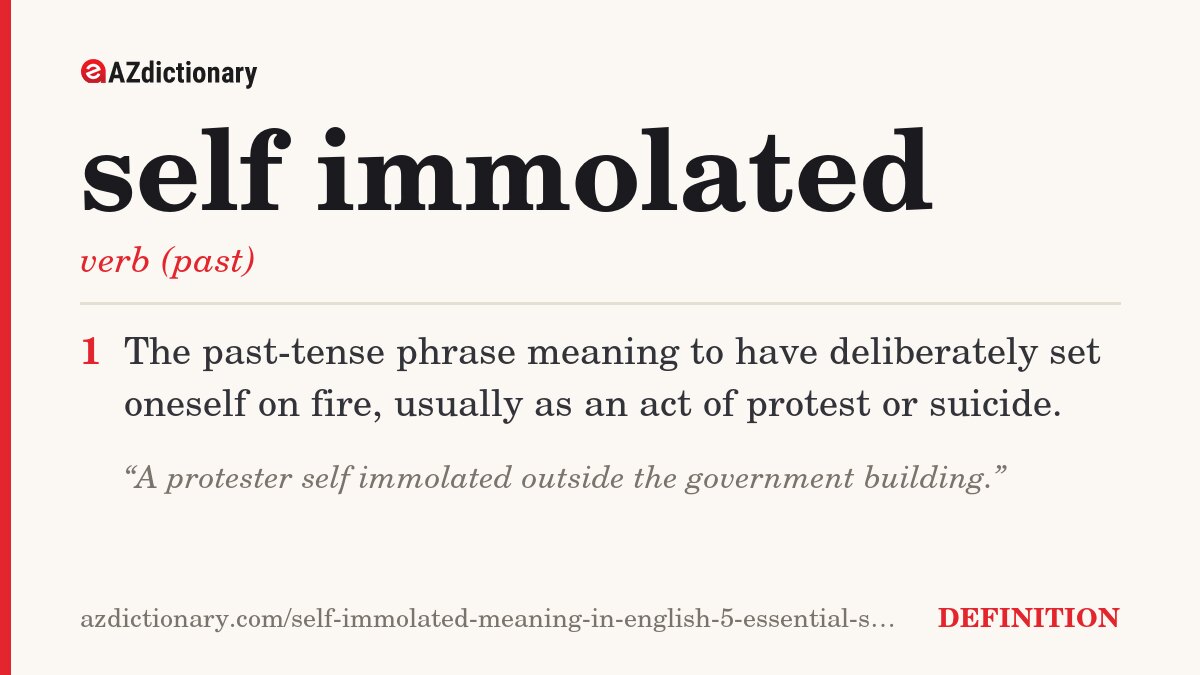
Part of speech: verb (past)
Pronunciation: self-im-uh-LAY-ted
Meanings
- Literal: to have intentionally set oneself on fire. This is the primary and oldest modern sense, used when a person dies or attempts to die by burning themselves.
- Figurative: used metaphorically to describe an action that destroys a person, reputation, or cause, as in political self-destruction or an act that causes severe self-inflicted damage; for example, “an act of political self-immolation.”
Origin
The verb immolate comes from Latin immolare, originally meaning to sacrifice. The compound self-immolate and its noun form self-immolation became established in English by the 19th century, taking on the modern sense of deliberate burning of oneself. For dictionary treatment see Cambridge Dictionary and the etymology at Online Etymology Dictionary.
Examples in sentences
- After months of failed negotiations, one protester self immolated outside the government ministry.
- The photograph of the monk who self immolated shocked audiences around the world.
- Observers described his resignation speech as political self-immolation, because it destroyed his credibility.
- Reports said the prisoner had self immolated in his cell, and authorities opened an investigation.
- Writers sometimes use the phrase figuratively: “The CEO’s remarks self immolated the company’s public image.”
Synonyms, antonyms and commonly confused words
Synonyms: self-immolate, self-immolation, autocremation (rare), suicide by fire. Antonyms: survive, rescue, intervene. Commonly confused: immolate (can mean to sacrifice generally) versus self-immolate (to sacrifice oneself by fire).
FAQ
What does “self immolated” mean? It is the past-tense phrase meaning that someone set themselves on fire deliberately, usually as protest or to kill themselves.
Is self immolated the same as suicide? Often yes, because most modern uses refer to suicide by burning; however, the term can also be used metaphorically for severe self-damage that is not literal suicide.
Should it be hyphenated? Many style guides prefer self-immolated or self-immolate with a hyphen when used as a compound verb or adjective, but usage varies by publisher. Check the house style you are following.
How do journalists write about this? Journalists use clear, direct language and avoid sensationalism. They may write “self-immolated” or “set himself on fire” and include context about motive, legal and safety considerations.
