

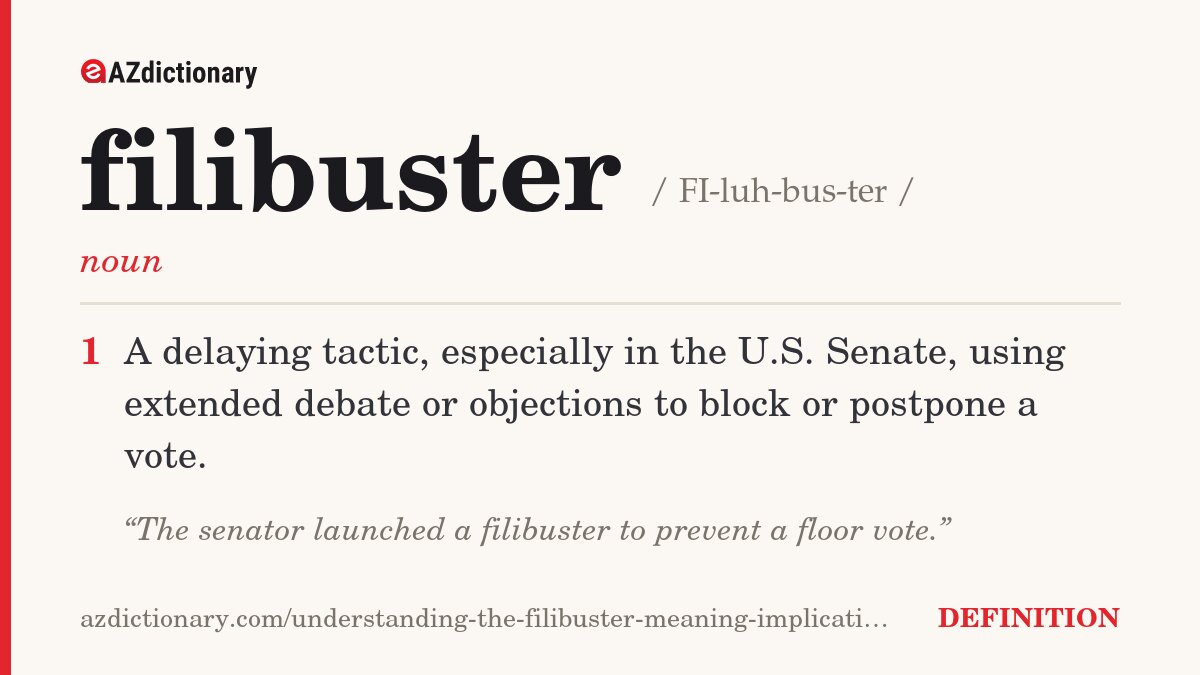
A filibuster is a tactic used to delay or block a vote, most often in the United States Senate, by extending debate or using procedural objections to prevent a measure from coming to a final vote. It can be an extended speech, an official objection, or a mere threat that stalls action. ([merriam-webster.com](https://www.merriam-webster.com/dictionary/filibuster))
Part of speech: noun
Pronunciation: FI-luh-bus-ter
Meanings
- Legislative tactic: A deliberate use of extended debate, formal objections, holds, or other parliamentary moves to delay or block consideration of legislation, nominations, or other business in a legislative body, especially the U.S. Senate. ([merriam-webster.com](https://www.merriam-webster.com/dictionary/filibuster))
- Historical sense: A 19th century meaning for the word is an irregular military adventurer or freebooter; this sense is the origin of the political use of the term. ([etymonline.com](https://www.etymonline.com/word/filibuster))
Origin
The word comes ultimately from Dutch vrijbuiter, meaning freebooter or pirate, which passed into Spanish as filibustero and into English in the mid 1800s. The political sense, comparing obstructionists to nineteenth century freebooters, appears in U.S. usage from the 1850s. ([etymonline.com](https://www.etymonline.com/word/filibuster))
Examples in sentences
- The senator launched a filibuster to prevent a floor vote on the bill.
- Leaders signaled they could not overcome a filibuster without more votes.
- A silent filibuster meant the bill was never scheduled for a vote.
- After debates about reform, some senators proposed changes to reduce filibuster use.
How it works, step by step
1. Objection or extended debate. A senator or group signals opposition and may speak at length, place a hold, or make procedural objections. In modern practice, the mere threat of extended debate often suffices to block action. ([everycrsreport.com](https://www.everycrsreport.com/files/2020-11-06_R46597_099cacea85260793d4b361950c17a3e2b57165e4.html))
2. Leader decision. Senate leadership decides whether to proceed to a cloture motion, which asks the Senate to vote to end debate. ([senate.gov](https://www.senate.gov/about/powers-procedures/filibusters-cloture.htm?eid=4447))
3. Cloture vote. Under Rule XXII, invoking cloture on most questions requires the affirmative vote of three fifths of the Senate duly chosen and sworn, normally 60 of 100 senators, to cut off debate and move to final action. Procedural changes in 2013 and 2017 lowered the threshold for many nominations, but the 60-vote threshold continues to apply to most legislation. ([senate.gov](https://www.senate.gov/about/powers-procedures/filibusters-cloture.htm?eid=4447))
In practice, because floor time is limited and cloture consumes effort, many disputes are settled before a public, prolonged speech occurs. That practical, non-speaking obstruction is often called a silent or virtual filibuster. ([d27r7ebsgu0es2.cloudfront.net](https://d27r7ebsgu0es2.cloudfront.net/files/20130626_RL32878_1eb074c852ba20e4f8c03a45b7e748f3eaa956ac.html))
Synonyms, antonyms and commonly confused words
Synonyms: obstruction, delay, stall, hold. Antonyms: cloture, agreement, unanimous consent. Commonly confused: “hold” (a senator’s private request to block scheduling) is a related but distinct Senate practice often linked to silent filibusters. ([everycrsreport.com](https://www.everycrsreport.com/reports/R43563.html))
FAQ
What is a filibuster? A filibuster is an effort to delay or stop legislative action, usually by extending debate or using procedural objections, most famously in the U.S. Senate. ([merriam-webster.com](https://www.merriam-webster.com/dictionary/filibuster))
Does a filibuster always involve long speeches? No. Historically some were long speeches, but today the term often covers silent or implied objections that make a vote impossible unless leadership can muster a cloture majority. ([everycrsreport.com](https://www.everycrsreport.com/files/2020-11-06_R46597_099cacea85260793d4b361950c17a3e2b57165e4.html))
How is a filibuster ended? By invoking cloture, a formal vote to end debate. For most matters cloture requires three fifths of senators duly chosen and sworn, normally 60 votes. Changes to Senate precedent have modified the threshold for some nominations. ([senate.gov](https://www.senate.gov/about/powers-procedures/filibusters-cloture.htm?eid=4447))
Why is the filibuster controversial? Supporters say it protects minority rights and encourages deliberation; critics say it enables obstruction and gridlock when a minority can block majority-supported measures. Analysis and reform proposals are widely debated. ([brennancenter.org](https://www.brennancenter.org/our-work/research-reports/filibuster-explained?ceid=%7B%7BContactsEmailID%7D%7D&emci=fd34c821-1673-ec11-94f6-c896650d923c&emdi=ea000000-0000-0000-0000-000000000001))
External links: Merriam-Webster: filibuster, U.S. Senate: filibusters and cloture.
