

Nosedive means a sudden, steep fall or decline. The word is used literally for an aircraft or object that drops nose-first and figuratively for a rapid drop in price, value, reputation, or performance.
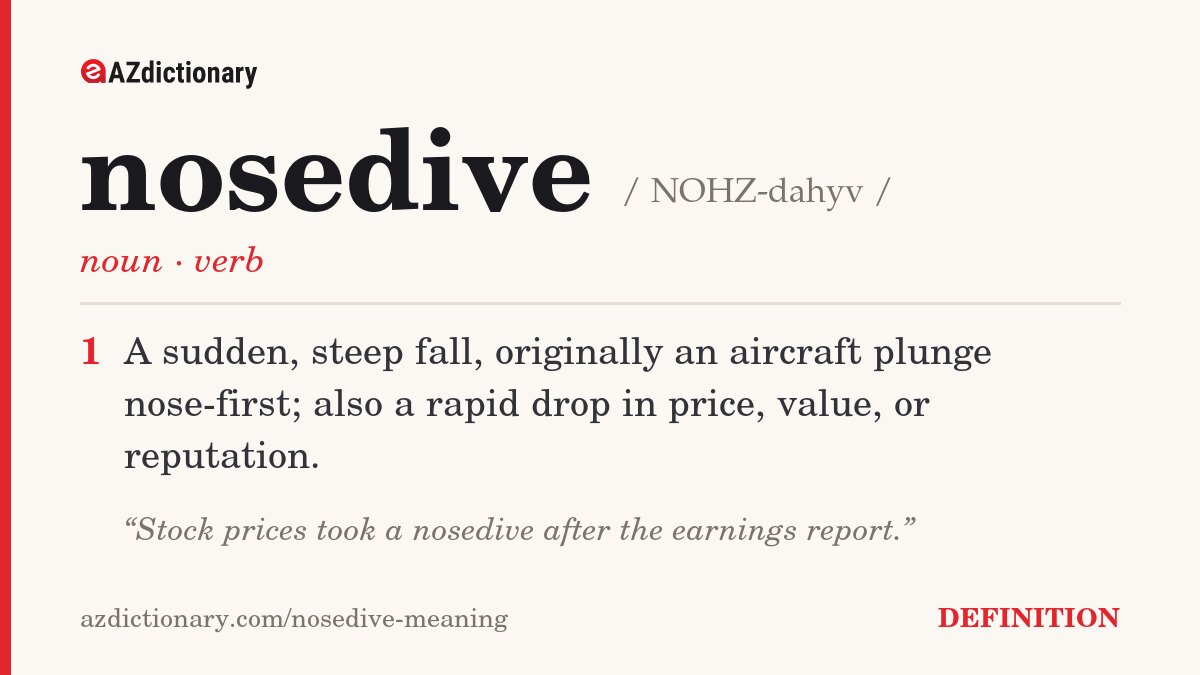
Part of speech: noun, verb
Pronunciation: NOHZ-dahyv
Meanings
- Literal, aviation: a steep downward plunge with the front or nose pointing downward, as of an aircraft.
- Figurative: a sudden, sharp drop or rapid decline in amount, value, quality, reputation, or performance.
Origin
The word is a compound of nose and dive, first recorded in the early 20th century, around 1910, 1915, originally describing an aircraft maneuver. Modern dictionaries record the same formation and early 20th century dating. For dictionary entries see Cambridge Dictionary and Dictionary.com.
Examples in sentences
- The fighter jet went into a nosedive before the pilot regained control.
- After the scandal, her public approval ratings took a nosedive.
- Company profits nosedived when the new product failed to sell.
- Home prices in the region nosedived following the economic shock.
- The stock took a nosedive the morning the earnings miss was announced.
Synonyms, antonyms and commonly confused words
Synonyms: plunge, plummet, tumble, collapse, slump, drop.
Antonyms: rise, soar, recover, increase.
Common confusions: nose-dive versus nosedive (both forms occur), and past tense forms nosedived or, less commonly in some sources, nosedove; most modern usage uses nosedived.
FAQ
What does “nosedive” mean? It means a sudden, steep fall, used both for a literal nose-first plunge and for rapid declines in value or status.
Can “nosedive” be used for markets or prices? Yes. Many dictionaries list a figurative sense for sharp drops in prices, values, profits, or ratings.
Is the term only for airplanes? No. It began in aviation but is commonly used figuratively for any steep decline.
What is the past tense of “nosedive”? The standard past tense is nosedived. Some older or dialectal sources record nosedove, but nosedived is far more common in modern usage.
Related Words
- drop
- free fall
- plunge
- slump
