

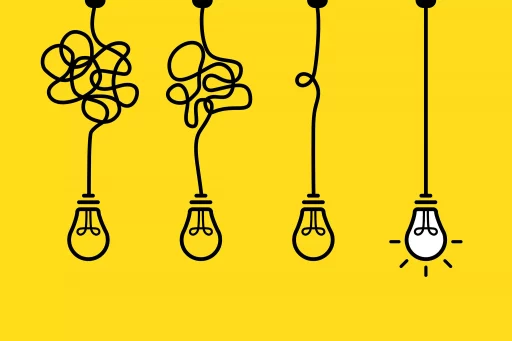


The phrase definition of morph appears across linguistics, biology, computing, and casual conversation, and that broad use is exactly why a clear explanation helps. In this post I unpack the main senses of the word, its history, and how people actually use it in sentences you might hear on a podcast or read in a research paper.

Table of Contents
What Does definition of morph Mean?
The simplest definition of morph is: a unit or act of change from one form to another, or the form itself depending on context. The phrase definition of morph crops up when someone wants to know which sense is intended, because morph wears several hats. In linguistics it is a minimal unit of form that carries meaning, while in biology and computing it often describes transformation or appearance.
Etymology and Origin of morph
Morph comes from Greek morphē, meaning form or shape. Scholars adopted it into English via New Latin in the 19th century, often attached to other roots to name forms or transformations, such as morphology and polymorph. That Greek root is also behind words like metamorphosis and anthropomorphic, where form is the central idea.
So when you ask for the definition of morph today you are tapping a long linguistic history of form and change. The Greek lineage helps explain why morph shows up in technical fields that care about shape, structure, and change.
How definition of morph Is Used in Everyday Language
People use morph casually to mean change or transformation, often in pop culture or tech talk. You might hear a streamer say a character ‘morphed’ into a different skin, or a developer say data ‘morphs’ from one schema to another. Below are realistic examples you could hear or read.
“The caterpillar morphed into a butterfly overnight in the nature documentary.”
“We need to morph this JSON into the XML format the API expects.”
“In that saga the hero morphed several times, each form revealing a new power.”
“Linguists identify the morphs that combine to make a word, like ‘un-‘ and ‘-able’.”
definition of morph in Different Contexts
In linguistics morph is technical: it is the concrete form that realizes a morpheme, the smallest unit of meaning. For example, the spoken forms ‘cats’ and ‘cat’ show different morphs for number. You can read more about this use on resources like Wikipedia’s morph page and linguistic glossaries.
In biology morph describes forms or variants within a species, as in polymorphisms where individuals have distinct physical forms. In computing and graphics morph often means an interpolation or transformation between shapes, like morphing one 3D model into another. In casual speech morph usually means to change, with a tone of surprise or dramatic shift.
Common Misconceptions About morph
One common mistake is treating morph as identical to morpheme. They are related but distinct: a morpheme is an abstract unit of meaning, while a morph is a physical form that expresses that morpheme. Another misconception is assuming morph always implies radical change. Sometimes a morph is a subtle grammatical variation, not a dramatic transformation.
People also confuse morph with mutate or metamorphose. Morph can imply gradual change or a designed transition like a visual effect. Mutate tends to mean unpredictable genetic change. Context matters more than you might think.
Related Words and Phrases
Several relatives share the same Greek root, and they help clarify different uses. Morphology studies form and structure in language and biology. Morphophonemics blends morph and phoneme to study how sound and form interact. Other cousins include metamorphosis and anthropomorphic, which borrow the root to describe dramatic change and human-like form respectively.
If you want practical cross-references see the entries for ‘morpheme’ and ‘morphology’ on trusted dictionaries like Merriam-Webster and language surveys like the Encyclopaedia Britannica on morphology. Those pages give complementary angles on the same root idea.
Why definition of morph Matters in 2026
Words that cross disciplines become tools for thinking, and morph is one of those tools. In 2026, fields from machine learning to evolutionary biology use transformations and forms as central concepts, so knowing the precise definition of morph helps you read papers and discussions without confusion. It also helps editors and communicators choose the clearest word for a given audience.
And in everyday culture, morph has become a shorthand for visible change, so knowing whether someone means a technical morph or a casual morph prevents misreading a sentence or a headline. That clarity matters when new technologies make transformations more literal and common.
Closing
So the definition of morph is not a single, sealed meaning. It is a family of related senses centered on form and change, with technical and casual branches. Use the word with a little attention to context and you will sound precise rather than vague.
If you want a deeper dive into linked concepts try these internal reads: morphology definition, morph usage, and word origins. Those pages expand on the examples and history I sketched here.